General Terrarium Care Guide
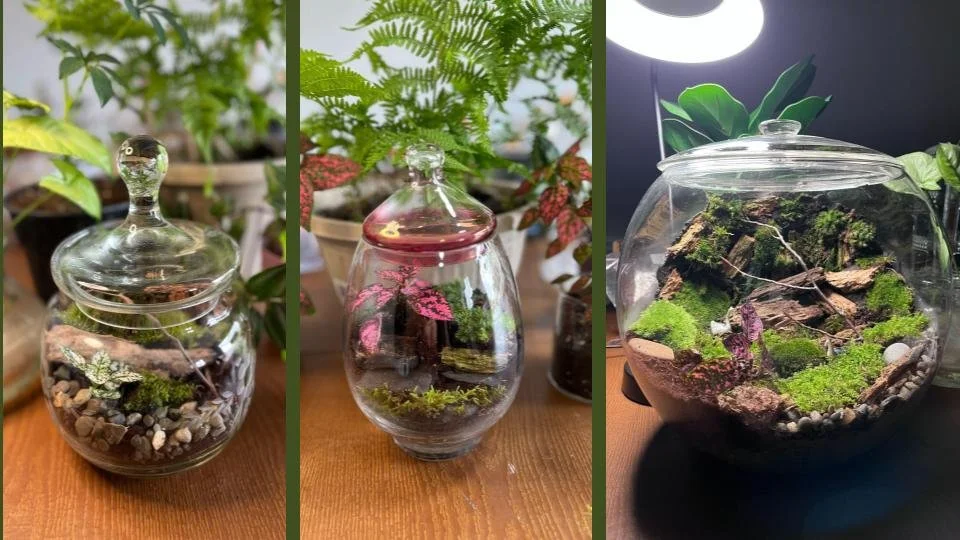
These are a few terrariums I have created, I allow every terrarium to acclimate for at least 4 weeks prior to allowing them to be sold. 🌺🌻🌼
What is a terrarium?:
A terrarium is a self sustaining miniature ecosystem that recycles its water and nutrients. They are great for apartments, offices, pet parents, or forgetful plant owners!I add native plants and organic material into each build to increase the chances that each terrarium will cooperate with its contents and form a collaborative, successful ecosystem. I use Ohio mosses, ferns, soil, gravel, bark, sticks, and organisms locally sourced from backyards, riverbeds, or grown in my home (with a sprinkle of novelty plants and decorative items in some pieces).
BASIC CARE OVERVIEW
Keep away from direct sun, water and trim as needed, no fertilizing, overall very low effort. A healthy terrarium should smell earthy like the forest!
Lighting & Temperature 🔆
Avoid direct sun and windows to prevent overheating. Terrariums are more cold tolerant than heat tolerant. Think of them as a miniature greenhouse, they will trap heat.Room temperature is idealLED lights are a great lighting source, they are gentle and won't burn your plants or overheat your terrarium while supplying useful light for photosynthesis. Full spectrum grow lights may cause overgrowth (which isn’t a bad thing) but may require more frequent trims for aesthetic purposes.
Watering 💧
Airtight terrariums may only need water once a year, if at all. Loose lid terrariums may need watering every month or less.Moss should remain hydrated, soil should not be dry or cracking, and plants should not appear wilted.There should not be large amounts of pooling water in the gravel or substrate layers, as this can cause root rot and oxygen deprivation in plants.Rain or distilled water only. Tap water has chlorine, salts, and minerals which can be harmful to your terrarium.
Condensation ☁️
Condensation/fog in the morning and evening is normal.Constant condensation can indicate too much water or too much light/heat. You can leave the lid cracked for a few hours to allow excess moisture to evaporate.If there is no condensation for several days, this can indicate dryness. AVOID pouring water into the terrarium, as this can quickly overwhelm the system and oversaturate the soil. Use a spray bottle to generously mist the plants, wood, and glass.
Other types of growth
ALGAE: indicates a healthy terrarium but can overgrow and block light. Wipe glass with a paper towel to remove excess.MOLD: Sometimes mold can grow if there is too much water, plant decay, or no beneficial insects to keep it at bay.
Spot clean moldy spots with hydrogen peroxide and a q-tip
MUSHROOMS:
Normal maintenance
Use sterile scissors to trim contents (you can sanitize with alcohol or boiling water). Trimming mosses and plants as needed can help prevent overgrowth and keep your terrarium looking neat. You can leave the trimmings inside for the system to recycle!Wipe glass inside and out with a clean paper towel to remove dust, algae, dirt, and keep a clean appearanceNo Fertilizing! Terrariums naturally recycle their nutrients. I have found that fertilizer can cause nitrogen burn, overgrowth, kill beneficial insects, and disrupt balance.
Clay wall terrariums
Clay wall terrariums have a substrate mixture containing bentonite clay, charcoal, and soil adhered to the sides of the terrarium to allow for vertical building and moss walls.Terrariums with clay substrates have very similar care to regular terrariumsThe clay should be soft to the touch, not dry or cracking.You may notice clay substrates tend to encourage more condensation because there is more water held in the terrarium, in these cases you can wipe the glass to remove condensation or crack the lid. Avoid over drying because that can cause cracking.
